
External Projects
Neuroscience Research
Santiago Canals and Claudio Mirasso Project: Non-Invasive Deep Neuromodulation via Temporal Interference


The brain functions through the coordinated activity of millions of neurons that communicate with each other via rhythmic electrical signals. These “brain rhythms” oscillate at different frequencies and act as a synchronization system, allowing different regions to work together efficiently.
When these rhythms are disrupted, cognitive difficulties may arise, such as memory problems, lack of attention, or impairments in other mental functions. In fact, experimental studies in rodents have shown that enhancing specific brain rhythms can improve performance in memory and learning tasks, suggesting that these oscillations not only reflect brain activity but also actively influence it.
In recent years, non-invasive brain stimulation techniques have been developed—methods that can be applied in humans without the need for surgery—with the aim of modulating these rhythms. However, current methodologies primarily act on the more superficial layers of the brain and barely reach deeper structures, such as those involved in memory, which limits their effectiveness in influencing complex cognitive processes.
This project investigates an emerging technique known as temporal interference. Its approach is innovative: applying two high-frequency electrical currents from outside the skull that, individually, do not produce noticeable effects on neuronal activity. However, when these currents overlap in a specific region of the brain, they generate a low-frequency rhythm capable of modulating neuronal activity.
In other words, although each individual current “goes unnoticed,” their interaction within the brain creates an effective signal precisely at the point where they overlap. This principle opens up the possibility of stimulating deep regions, such as those involved in memory, without the need for invasive procedures.
The work is carried out in three complementary stages:
– First stage: experimental validation. The phenomenon will be studied in animal models to precisely understand how the currents pass through different tissues and how they modulate neuronal excitability. In addition, the impact of different stimulation protocols on the frequency and synchronization of brain activity will be systematically evaluated.
– Second stage: personalized computational modeling. Experimental results will be integrated into advanced computational models (digital twins) built from neuroimaging and electroencephalography data. These models will allow simulation of current distribution and adjustment of stimulation parameters to optimize effectiveness for each individual.
– Third stage: translation to humans. Finally, the experimental and computational knowledge will be transferred to the design of specific brain stimulation protocols that can be validated in studies with human participants, ensuring safety, precision, and reproducibility criteria.
Overall, the project aims to develop a safe and personalized neuromodulation strategy that contributes to enhancing cognitive function in a non-invasive manner.
Ceferino Maestú Project: Modulation of Tumor Proliferation through Bioactive Magnetic Fields
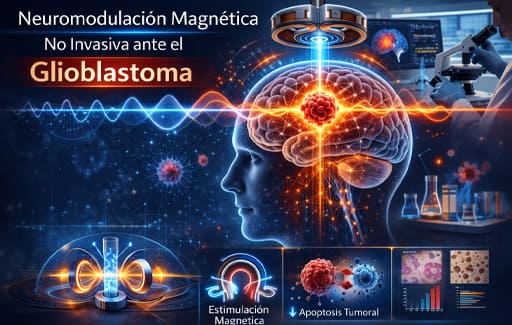

Glioblastoma is the most aggressive and common primary brain tumor in adults, associated with a devastating prognosis and a median survival of around 15 months, as current treatments (surgery, radiotherapy, and chemotherapy) are largely palliative rather than curative. In response to this challenge, the Bioelectromagnetism Laboratory (CTB-UPM) proposes to investigate a non-invasive therapeutic strategy based on low-frequency, low-intensity magnetic stimulation.
The central hypothesis of the study is that the application of specific bioactive magnetic field codes can modulate cellular signaling pathways and reduce tumor proliferation in an in vivo model.
The project is based on previous in vitro results that demonstrated the ability of these fields to reduce glioblastoma viability in two UPM projects also funded by the Foundation. The methodology will employ a C57BL/6 mouse model implanted with glioblastoma cells. The animals will be divided into four experimental groups (control and treated) and exposed to a RILZ coil system (patented by the Foundation) that generates square waves at 50 Hz with intensities of 10, 25, and 100 µT. Outcome evaluation will include measurement of tumor volume, histopathological analyses to assess necrosis and proliferation, and studies of biochemical biomarkers. This study is expected to validate a new treatment modality capable of slowing tumor growth or inducing cell death, laying the groundwork for low-toxicity physical oncology therapies.
Javier de Felipe Project: Intelligence and Brain Microstructure.
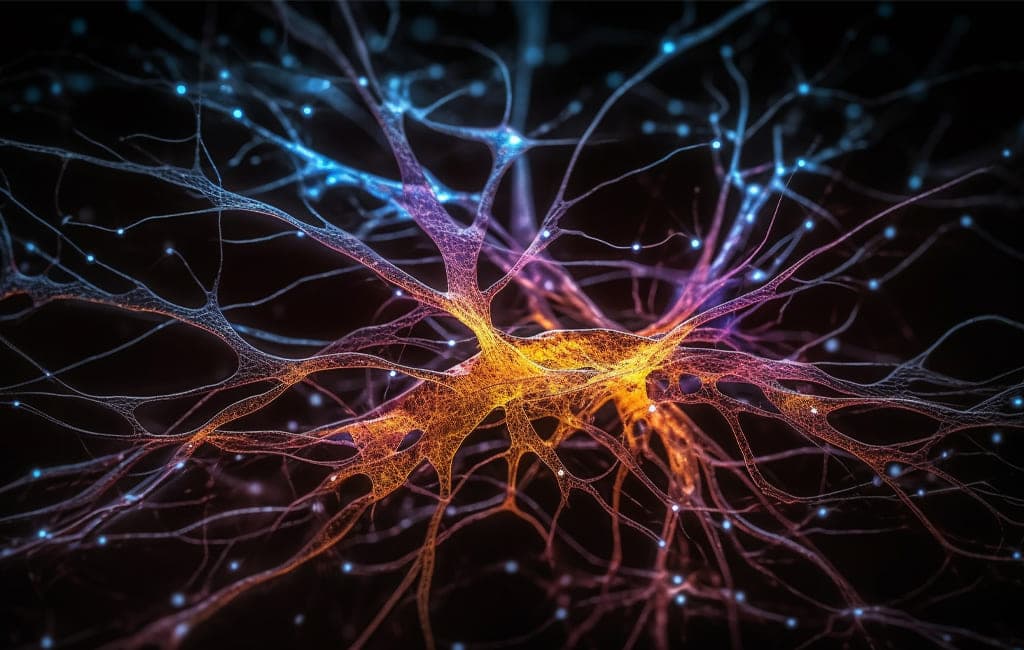

The existence of prodigies—or otherwise typical individuals with extraordinary abilities in one or more areas of art or science—is a well-known phenomenon that appears from time to time throughout history. This superior intellectual or artistic capacity has attracted the attention of numerous scientists seeking to understand what is special about the brains of these individuals, especially given that there are people with very large brains and others with much smaller ones who nonetheless exhibit similar cognitive abilities, with differences that can reach 50% or more in brain mass. In other words, variations involving billions of neurons and synapses do not seem to have a clear functional impact. However, this cannot be a sufficient explanation, since if a typical individual were to lose half of their brain mass, the consequences would be catastrophic.
So, what determines whether a person is more intelligent, or a genius in music, painting, literature, and so on? Given that the complexity of the dendritic tree of pyramidal cells and the number of synapses per neuron are greater in humans than in other species, our starting hypothesis is that it depends on the individual pattern of the structure of pyramidal cells and their connections—or the “synaptome” (more synapses = greater intelligence)..
The main objective is to conduct a detailed microanatomical analysis of the cerebral cortex in individuals with different IQ values (low, medium, high) in order to obtain data on the possible differences among them. This project consists of two main objectives:
- Morphometric analysis of pyramidal cells labeled intracellularly with Lucifer Yellow. This objective will encompass the study of dendritic arborization, including dendritic length, branching patterns, and dendritic tree complexity. Additionally, the number, size, and density of dendritic spines will be analyzed. With this aim, we intend to examine in detail the possible differences in the microanatomy of pyramidal cells between individuals with different IQ scores.
- 3D study of synaptic organization using a cross-beam electron microscope (dual beam; FIB/SEM technology) to obtain more precise and extensive information on synaptic organization than has been possible so far. This objective will involve a detailed quantitative and qualitative analysis of the number, density, and size of excitatory and inhibitory synapses in individuals with different IQ values. With this aim, we seek to determine whether there are differences at the synaptic level.
